
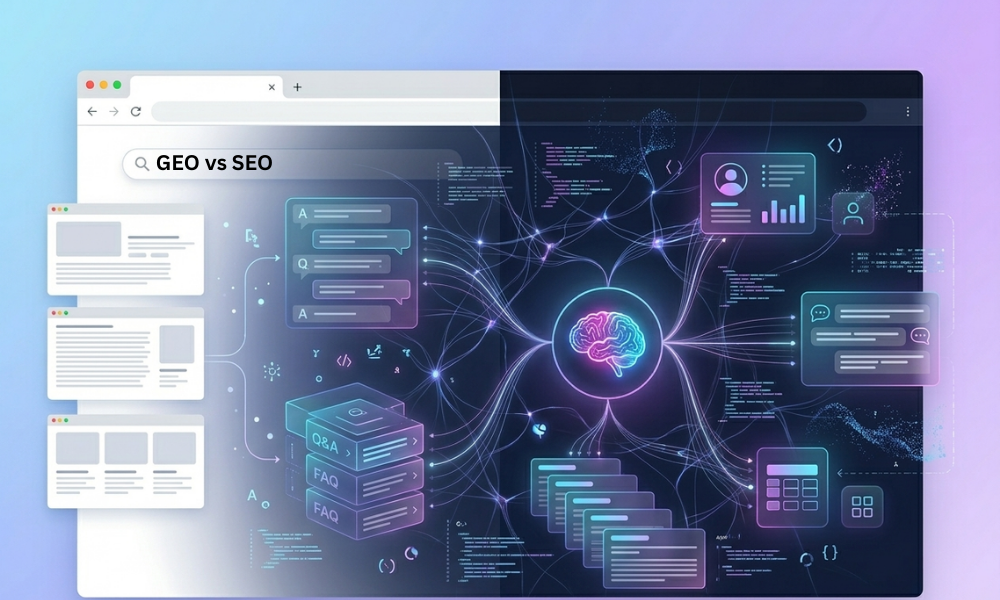
The search engine landscape is constantly changing, and this has become especially noticeable with the launch of AI-powered search tools like ChatGPT, Gemini, and Perplexity. Although traditional SEO still drives website traffic, these tools are changing the way users find information online. Users no longer need to click different site links to find information. Instead, they can get instant answers from AI systems.
This shift has led to the development of Generative Engine Optimization (GEO), a strategy designed to make it easier for AI tools to understand, retrieve, and reference your content when generating responses. Although GEO is not a replacement for SEO, it helps boost your SEO efforts, so your business maintains high visibility on both search engines and AI tools. Here’s a step-by-step checklist that can help you integrate GEO into your current strategy
Step 1: Audit Your Current SEO and AI Visibility
Before implementing GEO, it’s important to conduct a full audit of your current SEO performance. Doing this can help identify top-performing keywords, important pages, and content that’s driving traffic. Evaluate the way your brand appears in AI-generated search results by searching for your brand name, services, or industry-related questions on AI tools. Check whether your company appears in the responses and what sources are being referenced. This information can help you make the right adjustments to your strategy.
Step 2: Optimize Your On-Page Content
After understanding your current visibility, the next step is to improve your website content. AI tools give more importance to content that is clear, well-structured, and informative. Review your most important pages and update the content with clear headings and subheadings, FAQs, relevant internal links, and useful external sources/references. When content is well-organized, it becomes easier for search engines and AI models to crawl and understand your content.
Step 3: Structure Content for AI Retrieval
Generative search engines depend heavily on structured information. If you want to boost your chances of appearing in AI-generated answers, you must format your content in a way that allows AI systems to interpret it easily. This includes formats like step-by-step guides, FAQ sections, comparison tables, and checklists. Implementing structured data (schema markup) for key pages also helps search engines understand your business, services, and content type, and makes it easier for AI systems to extract accurate information.
Step 4: Build Off-Page Authority
AI platforms often collect information directly from trusted third-party sources. This makes it vital to build a positive brand presence across the web. For GEO success, focus on building authority by earning mentions from credible websites like industry blogs, news publications, forums, Q&A platforms, and professional communities. Guest posting, thought leadership, and expert interviews can also help boost your brand’s credibility and visibility.
Step 5: Strengthen Your Brand and Entity Signals
To understand the relationship between topics, AI systems depend on entities like brands, companies, and experts. If you want to strengthen your brand signal, it’s important to maintain consistent business information across platforms. Make sure that you use the same brand name and description everywhere. In case any directories or professional platforms have outdated information, update them promptly. Clearly explain your services and expertise on your website, as it shows strong and consistent brand signals. This helps AI systems associate your company with specific topics and services.
Step 6: Improve Technical SEO for AI Crawlers
Technical SEO is a vital part of GEO integration. Your website must be easy for search engines and AI crawlers to access and interpret. With technical improvements including fast page loading speeds, mobile-friendly design, clean site architecture, XML sitemaps, and proper HTML structure, you can ensure your site content is efficiently crawled and understood by AI tools and search engines.
Step 7: Monitor AI Visibility and Performance
After the implementation of GEO strategies, it’s vital to track results regularly. Other than tracking traditional SEO metrics like website traffic and keyword rankings, also monitor brand mentions in AI-generated answers, growth in brand search queries, referral traffic from AI platforms, and engagement from users who are discovering your website through AI tools. Monitoring this data regularly can help you find opportunities to improve content and boost visibility.
Contact SEO Services Near Me to integrate GEO into your SEO strategy and drive more website traffic.
